
Tag: dailyprompt

  • Security and Adventure Are Not a Choice — They Are a Balance

    Security and Adventure Are Not a Choice — They Are a Balance

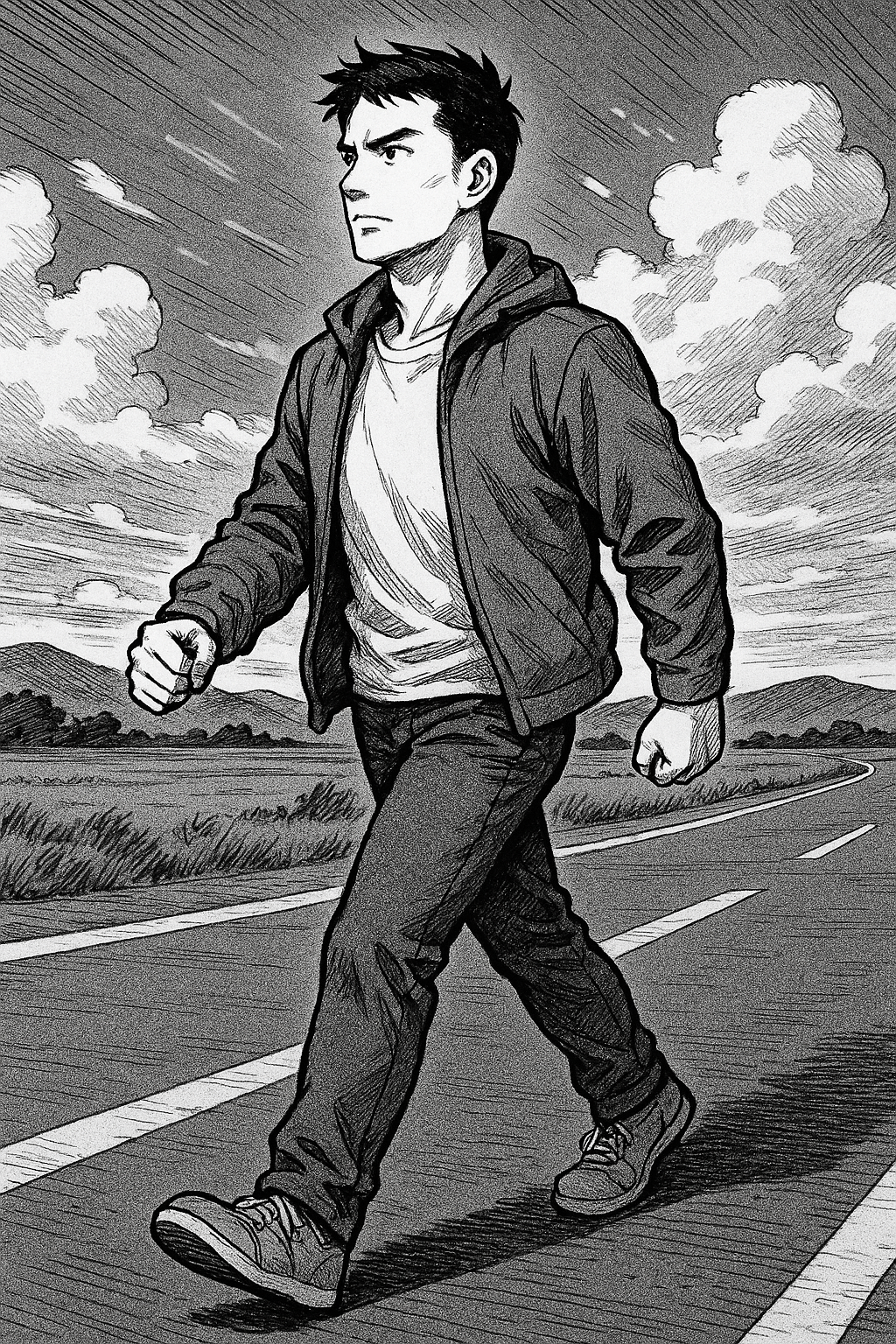
    Are you seeking security or adventure?

    People often ask: Do you want security, or do you want adventure?

    When I was younger, I thought I could have both — never letting go of anything.

    I said it with confidence: Only kids make choices. I want both.

    But as I walked further down the road, I realized—not every path can be walked twice.

    As we grow older, the number of paths we can take begins to narrow.

    Time becomes shorter, responsibilities heavier, and the cost of failure higher.

    Some choices, once missed, never come back.

    But it is precisely because of this that I’ve come to understand:

    Security and adventure are not opposing options. They are two states we must learn to balance.

    The Tao Te Ching 道德經 says:

    “Know the masculine, but keep to the feminine. Be the valley of the world.“

    Understand strength, but be willing to hold space for softness and retreat. It’s not about fearing risk, but about knowing what’s truly worth protecting.

    When I have loved ones by my side, I find more courage—

    but I also become more unwilling to lose.

    Through love, I’ve learned to take risks.

    Through love, I’ve also learned to protect.

    Alone, I might have rushed ahead with no hesitation.

    But now, I choose to live with stability—for the ones I hold dear.

    As Tao Te Ching 道德經 also says:

    “The highest good is like water. Water benefits all things and does not compete.”

    Security is the depth of water; adventure is its flow. We move through life like a river—not rushing blindly, nor staying still—but adjusting to the moment, choosing balance at every turn.

    Security and adventure are not a choice. They are a path of balance.

    Not a compromise, but a form of maturity.

    Not hesitation, but calm resolve.

    Not giving up on dreams, but knowing when to be still, and when to move.

    Love gives me the courage to risk, and the reason to stay safe.

  • Who Would I Invite to Dinner? If I Could Invite Ko Wen-je

    Who Would I Invite to Dinner? If I Could Invite Ko Wen-je

    If you could host a dinner and anyone you invite was sure to come, who would you invite?

    If I could invite anyone to dinner and be certain they’d come, I think I’d invite Ko Wen-je.

    It’s not because I particularly support his political views, nor because he’s free of controversy today. In fact, quite the opposite—he’s currently under investigation and surrounded by public scrutiny. The image of him as a clean and rational public figure has become increasingly blurred. And yet, precisely because of that, I find myself wanting to sit down and have a proper meal with him.

    A Dinner on TV

    My first encounter with Ko Wen-je came through a Taiwanese TV show called Who’s Coming to Dinner? In one memorable episode, a medical student about to graduate confessed he had no plans to take the physician licensing exam. Instead, he hoped to become a full-time volunteer—a decision that left his family worried and confused.

    The show invited Ko Wen-je—then still a physician at National Taiwan University Hospital—to join the family for dinner and help talk through the issue.

    Rather than lecturing or scolding, Ko spoke with calm logic, clear thinking, and a surprisingly gentle tone. He didn’t push the student back onto the so-called “mainstream path,” but instead used reason and empathy to gently peel back the layers of confusion, both in the student and his family.

    I remember he said something that left a deep impression on me. The gist was:

    “Right now, your road is wide. If you don’t take the licensing exam, you’re narrowing it too soon. Keep your options open. Don’t close the door before you even know where it leads.”

    He’s Not Just Himself—He’s Our Projection

    Years later, Ko Wen-je is no longer just a doctor. He’s a former mayor of Taipei, founder of a political party, and even a former presidential candidate. These days, he’s caught in a whirlwind of accusations, court cases, and public debate.

    This only makes me more curious: Does he still believe in what he used to say so clearly? Do those values still hold for him? Or have they been reshaped—worn down—by politics and power?

    Perhaps the real reason I want to invite him to dinner isn’t merely to talk with him, but to confront the version of myself who once resonated so deeply with what he stood for.

    Every Society Has Its Heroes

    Every country, every society, has its version of the “righteous figure.”

    In Japan, people tend to revere quiet, diligent craftspeople. In the U.S., the public loves heroic individuals with grand visions who defy the odds. In Taiwan, for a while, we seemed enamored with a different type—rational, pragmatic, no-nonsense professionals who spoke plainly and acted efficiently. Ko Wen-je was, for a time, a near-perfect reflection of that ideal.

    But our heroes often fall. Or at the very least, they change. And when they do, it often says as much about us as it does about them.

  • Things That Get Better With Age

    Things That Get Better With Age

    What do you think gets better with age?

    First, let’s talk about what gets worse.

    Physical strength definitely fades away little by little. I used to be able to stay up late and still push through, but now if I stay up late even once, my whole day feels like my brain is stuffed with cotton.

    My reactions have slowed down too. When someone finishes speaking, I need a couple more seconds to catch up; before, it felt like I was jumping, now it’s more like walking.

    Sometimes, even my thinking feels like broken gears — my brain wants to turn, but just can’t.

    Not to mention the unavoidable fact: as we get older, we get a little closer to the finish line.

    But I read a book called Thinking, Fast and Slow.

    Psychologist Daniel Kahneman says the brain operates in two ways: one is fast, intuitive “fast thinking,” and the other is cautious, effortful “slow thinking.”

    When I was young, I almost always lived by “fast thinking.” I would just act first and think later, reacting on intuition and making quick decisions.

    Sometimes it was efficient, sometimes I fell hard — though I rarely admitted it. Back then, I thought fast was good and slow was useless.

    But in recent years, as my physical strength waned and my mind dulled, I’ve had to slow down.

    Not because I became smarter, but because I can no longer go fast. At first, I was a bit reluctant, but gradually I realized: some things really require slowing down to see clearly.

    For example, the unspoken meanings in conversations;

    for example, what a decision truly means to me;

    for example, some patterns I kept repeating in the past were just things I hadn’t noticed.

    These things weren’t impossible to understand when I was young — I just didn’t have the energy or time to face them. Now, it’s mostly not that I’m wiser, but that I have no choice but to face them honestly.

    To be honest, slowing down isn’t necessarily a good thing. It’s not romantic or free — it makes me start calculating how much time I have left, paying attention to small health issues, and thinking about which relationships are worth the effort.

    But because I slow down, I can endure anger better, am less easily fooled by appearances, and am more willing to admit “I’m actually not sure.”

    Maybe that’s enough.

    I won’t say this is some beautiful personal growth, but amid all the decline, finding a few things that get better is a kind of arrival.

    Some things get worse with age — that’s undeniable.

    But some things can only be gained through time. Not stronger, but more honest, more effortless, more truly myself.

    If this counts as getting better, then I’m willing to accept this way of aging.

    Getting old is not evolution — it’s slowly letting go of things that have been held on too long.

  • Routine, and the Gentle Chaos of Life

    Routine, and the Gentle Chaos of Life

    What time do you go to bed and wake up currently?

    I usually go to bed around 10:30 and wake up at 7:00.

    It’s a fairly regular routine.

    But honestly, it’s just an outline—life doesn’t always follow the schedule.

    Sometimes work keeps my mind spinning late into the night.

    Sometimes it’s a tough conversation with a parent that lingers in my head.

    Sometimes it’s just one sentence from my partner that I can’t stop thinking about.

    But there are sweet reasons too.

    Staying up late planning for a trip.

    Spending a few more minutes exchanging sweet words.

    Getting up earlier to prepare breakfast for someone I love.

    Or simply riding the wave of inspiration and coding late into the night.

    Sometimes I just sleep in for no reason. And that’s okay.

    I like routine—it keeps me from falling apart.

    But I’ve also learned to embrace the little disruptions.

    Because life isn’t a checklist.

    It’s something with warmth, and heartbeat, and meaning.

  • The Simple Things That Calm My Heart

    The Simple Things That Calm My Heart

    What strategies do you use to increase comfort in your daily life?

    As an office worker, I don’t have much free time.

    But I can choose to get up a little earlier and take the stairs—nine floors—as my exercise.

    In the morning, I make a cup of tea, read a few pages, and learn something new.

    Sometimes, I quietly donate to help those I can’t reach in person.

    At night, in a softly lit corner, I pray for today’s peace and ask for guidance for tomorrow.

    Sometimes, I silently repeat the names that give me strength—

    Buddha. Mahatma. Satnam. Waheguru.

    They serve as quiet reminders that light and truth are always here, not needing to be proclaimed loudly—just remembered.

    Keep learning.

    Keep moving.

    Keep giving.

    Keep praying.

    Not to change anyone, nor to prove anything, but because I believe these are the right things to do. Bit by bit, my mind feels less chaotic, my heart less tired.

    Simple is really good.

    And simple things, done sincerely, last the longest.

  • The Future That Excites Me Most Isn’t in the Cloud — It’s in a Child’s Eyes

    The Future That Excites Me Most Isn’t in the Cloud — It’s in a Child’s Eyes

    What are you most excited about for the future?

    When people talk about the future, it’s often filled with dazzling ideas — AI-driven worlds, Mars exploration, life inside the metaverse.

    All of that is exciting, sure. But for me, what truly fills me with hope isn’t something far away or high-tech. It’s something much closer: the growth of a child.

    Watching a young person learn to walk, to speak, to wonder and to care — that quiet transformation is more powerful than any invention. Every child is a seed of possibility, holding a future we can only begin to imagine.

    But then the real question is:

    What kind of world are we leaving for them?

    Are we handing down a planet weighed by endless geopolitical risk,

    media chaos, or cultures where “giving up” and “drifting” have become the norm?

    Because when young people lose hope, what kind of future is left for anyone?

    So no — we cannot afford to be passive.

    We may only be able to do small things:

    use less, waste less, be kind, do good. Give when we can. Even a smile or a gentle word matters more than we think.

    Because I believe this: little things add up.

    Even the smallest act can spark a light.

    And if our children grow up seeing that light — in us — then their future won’t just be a city of machines, but a world with heart.

  • For the Sake of Harmony, I Chose to Let Go of “Being Right”

    For the Sake of Harmony, I Chose to Let Go of “Being Right”

    What could you let go of, for the sake of harmony?

    When I was younger, I firmly believed in the saying, “Truth prevails wherever it goes.”

    At work, I valued technical skills and competence above all else—because that was fair, logical, and aligned with what I believed to be right.

    But as the years passed, I gradually came to realize something:

    In real life, feelings and relationships often matter far more than logic or truth.

    In Taiwan, the media landscape can be frustrating.

    Many outlets lean toward political or financial interests, going so far as to distort facts or spread misinformation to serve a particular agenda.

    Some of my friends and family have been deeply influenced by such media.

    They lack a rational perspective—but I’ve come to accept that arguing with them won’t change anything.

    Debates don’t bring us closer. They often drive us further apart.

    A recent incident involving China Airlines in Taiwan reminded me of this again.

    Due to poor decisions, a passenger plane flew for nearly five hours with only one engine before landing safely—an event that sparked public concern.

    I have friends who work at China Airlines, and during our conversations, they tried to defend the company.

    But I could feel their helplessness too—

    some things are known by everyone, even internally, but simply can’t be spoken aloud.

    Sometimes, they even have to defend decisions they don’t personally agree with.

    That’s when I understood even more clearly:

    Not every silence means agreement, and not every defense comes from the heart.

    We’re still family. We’re still friends. We still live and work together.

    Even if we disagree, life must go on.

    Rather than fixating on who’s right, I’d rather focus on what we still share, and what’s still worth preserving.

    For the sake of harmony, I’ve chosen to let go of being right.

    Not because I no longer care about truth—but because I care even more about people.

  • 🎧 The Melodies That Stayed With Me

    🎧 The Melodies That Stayed With Me

    What is your favorite genre of music?

    Back in my student days, I listened to a lot of music. That period more or less shaped my taste—and most of the songs I love now trace back to what I heard back then.

    I tend to prefer songs in Japanese, English, and Chinese. Honestly, I once got the most basic Japanese certification, but I still can’t really understand what the lyrics are saying 😆. And yet, the melodies just sound so good.

    Songs like “Sekai ga Owaru made wa…” from Slam Dunk still fill me with energy. Detective Conan has countless opening and ending themes—each one feels like a little time capsule of growing up. And even now, I still remember the thrill of those Future GPX Cyber Formula soundtracks.

    It wasn’t just anime, either. J-dramas had some unforgettable theme songs. Crying Out Love in the Center of the World, Under One Roof, Orange Days… all of them had soundtracks full of romance, sorrow, and pure youthful emotion. Even if I forget the plot, once the music plays, everything comes flooding back.

    When it comes to English songs, movies played a huge role. Way Back Into Love from Music and Lyrics, the emotional ballads from Armageddon and Deep Impact—they became the emotional background music of my memories. Then there’s Amazing Grace, or ABBA’s Happy New Year—songs that carry a sense of ritual, like time suddenly rewinding.

    Even though I don’t consider myself good at English, I somehow manage to understand some lyrics. Not everything, of course—but sometimes one line is enough to hit you right in the heart. Maybe the melody and emotion get there first, and the meaning follows.

    Maybe not fully understanding some lyrics actually helps me focus on the music itself. No need to analyze or interpret—just listen, and feel. It’s a simple kind of joy.

    To this day, I still go back to those old songs from my school days. They’re like a soundtrack that never fades, playing quietly in the background as I move through life.

  • Memories of Kagoshima — Now a Volcano Awakens

    Memories of Kagoshima — Now a Volcano Awakens

    Describe your most memorable vacation.

    Today I saw the news: the Shinmoedake volcano in Kagoshima, Japan, has erupted. And it immediately brought back memories of one of my most joyful and unforgettable trips — a group tour to Kagoshima.

    It was my first time traveling abroad after the COVID pandemic. Everything felt a bit unfamiliar, but also especially precious.

    What I remember most was the hotel, not far southwest of where the volcano erupted — Castle Hotel.

    The room was unbelievably spacious: a Western-style living area, a balcony, a tatami sitting room, and a separate tatami bedroom. I still remember walking in and doing a few excited laps around the room, like a kid seeing a hotel for the first time.

    During those days in Kagoshima, I soaked in hot springs almost every day. The hotel had its own facilities, so I could relax without having to go anywhere else.

    And I even tried Kagoshima’s unique sand bath — being buried in warm sand with only my head exposed. It felt strange at first, but deeply soothing, like being gently embraced by nature.

    Kagoshima is quiet, clean, and comforting. Those few days remain vivid in my memory. Seeing images of smoke and lava on the news now feels surreal. The calm back then and the tension now — such a stark contrast.

    Maybe that’s what travel really is — moments that stay with you, resurfacing in the most unexpected times.

    May Kagoshima stay safe.