Category: Blog

A Life Woven with Innovation and Vision.

  • The Best Moment

    What’s your favorite time of day?

    My favorite time of day always shifts.

    Sometimes it’s the fresh air of the morning, sometimes the quiet of blogging.

    Sometimes it’s enjoying a good meal, sometimes the freedom of travel,

    and sometimes it’s simply resting before sleep.

    But one answer never changes—

    it’s being with my partner.

    When we talk, time flows gently, becoming the best moment of all.

  • My Recipe in Progress

    What’s your favorite recipe?

    When I was a kid, fried food was rare at home. The sizzling oil and smoky kitchen were things I mostly saw on TV.

    Now, with an air fryer, fries, chicken wings, or fish cakes can be ready in just a few minutes.

    Costco sells all kinds of ready-to-cook food, which makes it even easier. Somewhere between ready-made and homemade, just a little touch turns it into a meal.

    A sprinkle of pepper, a handful of scallions, or simply waiting a few extra minutes for a crispier skin—it often feels more satisfying than a restaurant.

    So, my favorite “recipe”?

    Honestly, it’s simple: an air fryer, some Costco food, and a tiny bit of creativity.

    No complicated steps, no secret ingredients—just the taste I enjoy the most.

    And the most important part… well, aside from the air fryer, everything else is still in the “work-in-progress” stage. 😅😆

  • 日本的地名,充滿詩意

    日本的地名,充滿詩意

    那些靜靜存在、卻在心中留下詩的一行的名字。


    走在日本,光是看著地名,就像在讀一首詩。

    那不是翻譯錯覺,也不只是文字的美感,而是一種語言與風景、歷史與情感交織出來的氣氛。

    像是「霧島」,彷彿山巒深處,霧氣流轉之地;

    「由布院」,聽起來像風在樹葉間流動,溫泉蒸氣裊裊升起;

    「月寒」,有種淡淡的孤寂與清冷,像一首冬夜的俳句。

    有些地名讓人聯想到四季:

    春天的「花卷」、夏日的「涼風」、秋夜的「鹿角」、冬雪裡的「白川鄉」。

    也有些地名,像是訴說著一段歷史:

    「鎌倉」、「長岡京」、「大和」,名字裡自帶厚重與靜謐。

    而像「水無瀨」、「香住」、「風間浦」這些名字,本身就是一種畫面。你不需要去過那裡,就能感覺到水的流動、香氣的殘留、海風的輕拂。

    說到這些詩意地名,我總會想起——神戶。

    「神」是神聖的,「戶」是門扉。神戶的名字原本來自「侍奉神明之地」,後來成為港都的名字。這裡的海與山、歷史與現代、災難與重生,讓這個名字更添一層溫柔與堅韌。

    神戶就像是一座靜靜敞開的大門,迎著來自遠方的海風,也守著過往的信仰與傳承。

    日本的地名,常常只是一排字,卻能勾起整片風景、整段記憶。它們無需強調,也不刻意展示,只是靜靜地存在,靜靜地美著。

    有些地方,你一輩子可能只會路過一次。

    但那個名字,卻會在你心中,留下詩的一行。

  • Kobe Awaits, We Together

    Tell us about the last thing you got excited about.

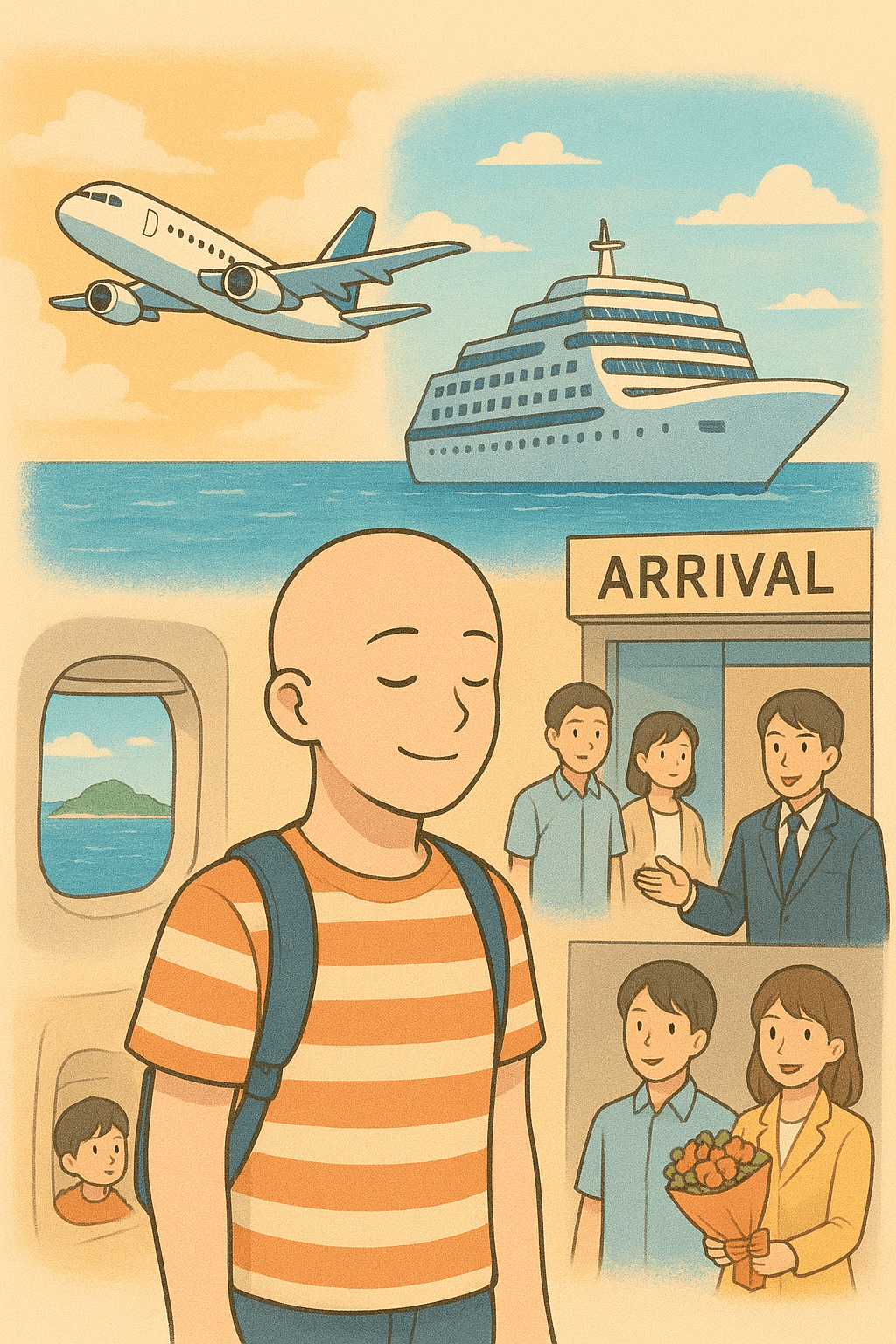
    The last thing that got me really excited was traveling abroad again.

    Kobe.

    No matter how many times I travel,

    the moment I step onto the airplane always feels the same—

    pure excitement, like my heartbeat rushing ahead of me.

    The city waiting on the other side,

    the food, the streets, the unexpected moments—

    but most important of all,

    going there together with the one I love. 🥰

  • The Edge of the City

    How would you design the city of the future?

    When I was a kid playing SimCity 3000,

    I loved turning resources to unlimited.

    No fear of bankruptcy, no complaints from citizens—

    just building a city, piece by piece, the way I liked.

    The one thing I remember most

    wasn’t the skyscrapers or the parks,

    but the waste-to-energy plant.

    Expensive, highly polluting,

    yet it handled garbage and produced power at the same time.

    I always built it at the city’s edge,

    letting the pollution drift outward,

    selling the extra capacity to neighboring towns.

    Back then, it felt perfect.

    Now I see—it was just exploitation.

    The city of the future can’t work that way.

    Trash isn’t something to “get rid of.”

    It should return to the cycle, become a resource again.

    Energy shouldn’t come from burning and consuming,

    but from flowing and sharing,

    like sunlight and wind—

    no one has to be sacrificed, and everyone is lit.

    In my future city,

    it’s not the buildings or the roads that matter most,

    but people willing to share,

    willing to live together.

  • Where did my name come from?

    Where did your name come from?

    My name is Yichun Kao.

    When I was a kid, I once went to the “Xuehai Academy” to look up our family genealogy. I can’t really remember the details anymore, but at least there was some sort of lineage, a thread that connects me to the past.

    As for the meaning behind my given name? Honestly, I have no idea.

    But my nickname, that’s another story.

    For the longest time, I thought it was my grandfather who gave me the name Xiao Pi. Recently, while chatting with my sister, I found out it was actually her idea. She borrowed it from a character in some old cartoon.

    Back then, most of the cartoons we watched were imported. Their names often got “localized,” shaped by the habits and imagination of the translators. Especially the nicknames—they were loose, playful, sometimes even random.

    So maybe Xiao Pi was originally just some dubbing actor’s buddy’s nickname. And somehow, it stuck with me. 😆

  • What motivates me

    What motivates you?

    The reason I keep going?

    Of course, it’s my loved one.

    Whether it’s a simple message on my phone,

    or memories of our journeys together,

    just thinking of her

    is more than enough.

    Because love gives life its direction,

    and makes tomorrow worth waiting for.

  • I Remember the Moments, Not the Movies

    I Remember the Moments, Not the Movies

    What are your top ten favorite movies?

    What stayed with me were never the full stories.

    Not the plots, not the endings—

    but the fragments, the music, and the words that echoed long after the screen went dark.

    When I was a child, my favorite films were Miyazaki’s animations.

    Especially Castle in the Sky.

    I didn’t understand any deeper meaning back then—I was simply fascinated by the floating city and the flying machines. It felt like a secret base hidden in a dream, something I wanted to revisit again and again.

    In junior high, Titanic became the talk of our generation.

    Everyone could hum the theme song, and some even shouted “I’m the king of the world!” on the schoolyard. The plot has faded in my memory, but that shared moment of youth has stayed.

    As time went on, I forgot most of the stories, yet certain fragments remained.

    Like the U.S. president’s final speech in a doomsday movie: “God bless, and good luck to you.

    Or that scene in the Japanese drama Chance, where Takuya Kimura stood before the crowd and said: “I am the same as all of you.

    And then, there was the music.

    The grand themes of disaster films, carrying a sense of tragic heroism.

    Way Back Into Love, a gentle spark of hope from my youth.

    The soundtrack of Orange Days, soft and tinged with melancholy.

    The full stories may have slipped away, but the fragments and the music stayed.

    They are markers in time, reminding me of the moments when my heart raced, when my eyes grew warm, and when life—just for an instant—felt different.

  • 小公司 MIS 的雲端生存筆記

    在這個雲服務時代,身為小公司的 MIS,最常面對的不是新技術,而是 成本、方便、與模糊地帶的拉扯。

    為了省錢,我們常常用免費的雲服務:

    LINE、Teams、Google 全家桶,能省就省。

    即便使用人數還在「合法授權」的範圍內,三不五時還是會跳出升級廣告,提醒你:「嘿,要不要花點錢,換個安心?」

    更麻煩的是,這些廣告大多是從 services.xxx.com 這種通用子網域送出,跟真正的功能服務混在一起。

    你想靠防火牆擋?一刀切下去,廣告沒了,服務也跟著壞掉。

    所以要完全隔絕,幾乎不可能。

    這些「小煩惱」,正是免費版背後的隱形代價。

    最後只好自己找個平衡:

    • 郵件、硬碟、會議這些公司命脈,乖乖繳最便宜的方案。 其他零零碎碎的工具,就讓部門自由發揮。 真正要管的不是升級廣告,而是 帳號的進出與資料的安全。
    • MIS 的日常,不是寫程式,不是搞自動化,而是每天跟這些雲端服務拉扯、妥協,找到一個 不花太多錢、又能正常運作 的方式。
    • 免費的雲服務,就像便利商店的試吃——能吃幾口算幾口,但別真當三餐。(盡量~盡量~盡量)